
Stop Drafts and Water Damage at the Exterior
Siding, Windows and Gutters in Kansas City for homes with peeling paint, drafty rooms, or water pooling near the foundation after storms
Storm Pros MO replaces siding, windows, and gutters for homeowners dealing with moisture intrusion, high energy bills, and exterior surfaces that no longer protect the structure. When siding cracks, warps, or pulls away from the wall, water runs behind it and saturates insulation and framing. When windows lose their seal or frames rot, conditioned air escapes and drafts make rooms uncomfortable. When gutters sag, clog, or overflow, water undermines the foundation and causes basement leaks.
Siding replacement involves removing old materials, inspecting and repairing sheathing and moisture barriers, then installing new vinyl or fiber cement panels that lock together and shed water away from the wall. Fiber cement resists impact, fire, and insect damage and holds paint longer than wood or vinyl. Window replacement includes removing the old unit, flashing the rough opening, and installing energy-efficient windows with low-emissivity glass and insulated frames that reduce heat transfer. Gutter systems are sized to handle roof runoff, pitched for drainage, and equipped with downspouts that direct water at least six feet from the foundation.
If you're dealing with exterior damage, high heating costs, or water problems near the foundation, reach out to Storm Pros MO to schedule an exterior upgrade consultation for your home in Kansas City.
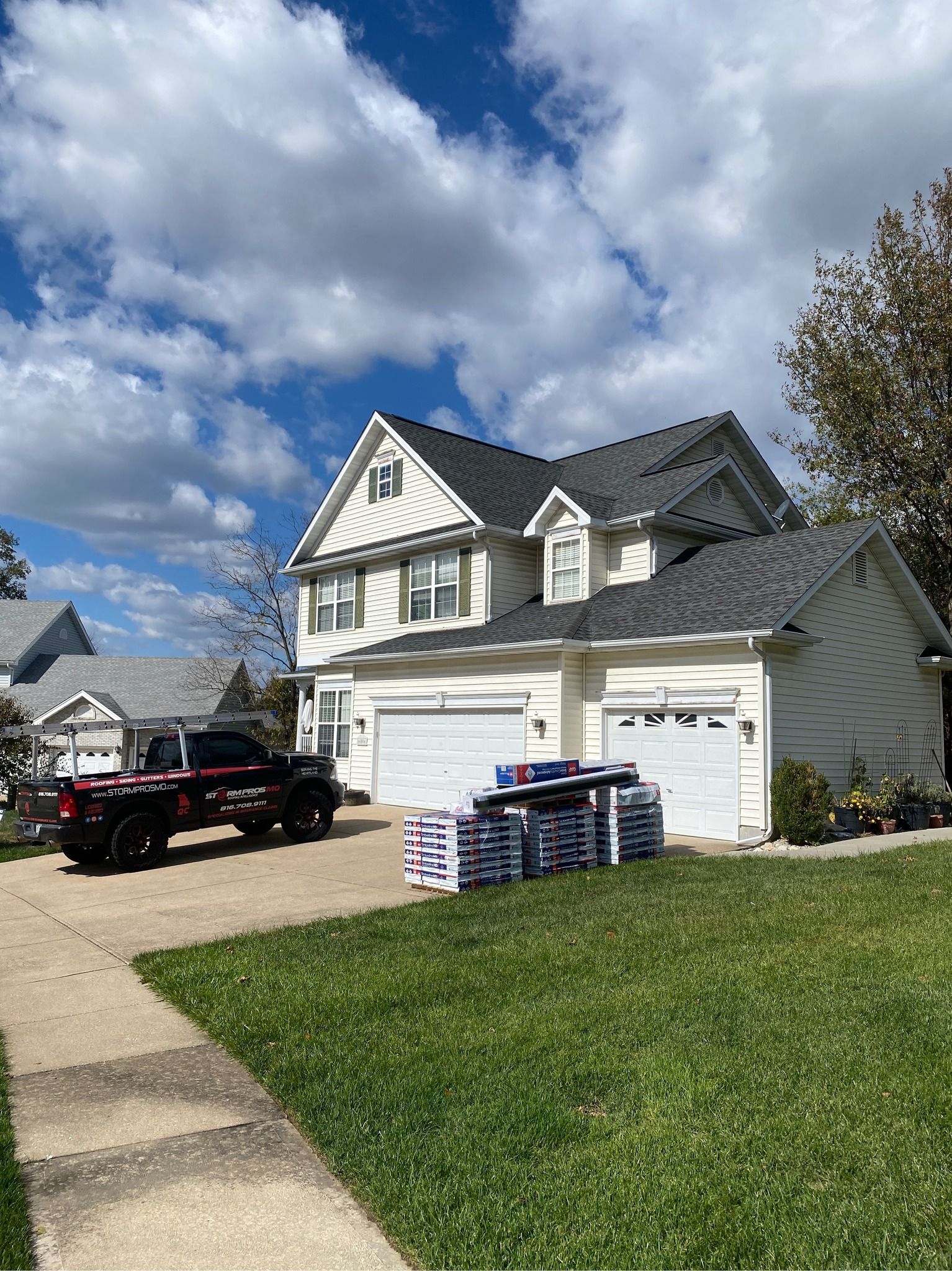
What New Siding, Windows, and Gutters Prevent
You'll have walls that resist wind-driven rain, windows that seal completely without gaps or condensation between panes, and gutters that move water off the roof and away from the house without spilling over or pulling loose. Siding locks together at seams and overlaps to create a continuous barrier, and corner trim and J-channels are caulked and fastened to prevent water from running behind the panels. Windows tilt in for cleaning, lock securely, and include screens that fit tightly without gaps.
After Storm Pros MO completes the work, you'll notice rooms stay warmer in winter and cooler in summer, energy bills decrease, and there's no visible condensation on glass during cold weather. Siding remains straight and tight against the wall without buckling or fading, and paint or color coatings hold up through freeze-thaw cycles and direct sun. Gutters drain completely after rain, don't sag or separate at seams, and require only occasional cleaning to remove leaves and debris.
Siding installation includes wrapping the house with weather-resistant barrier and flashing around windows, doors, and trim to create a continuous drainage plane. Windows are shimmed level and square, then sealed with low-expansion foam and exterior caulk to prevent air and water infiltration. Gutters are fastened with hidden hangers spaced to prevent sagging, and downspout extensions or underground drains are added where surface grading directs water toward the foundation.
Questions About Exterior Upgrades and Performance
Most exterior projects involve questions about material durability, insulation improvements, and how the work addresses water management and energy loss.
What makes fiber cement siding more durable than vinyl?
Fiber cement resists impact without denting, won't warp or melt in high heat, and holds paint for fifteen years or more, while vinyl can crack in freezing temperatures and fade under direct sun.
How do new windows reduce energy bills?
Modern windows include low-emissivity coatings that reflect heat, insulated frames that prevent thermal bridging, and tight seals that eliminate drafts, which reduces heating and cooling demand year-round.
When should you replace gutters instead of repairing them?
Gutters should be replaced if seams are separating in multiple locations, sections are rusted through, or the system lacks the capacity to handle runoff from your roof size and pitch.
Why does water pooling near the foundation matter in Kansas City?
Water that saturates soil around the foundation increases hydrostatic pressure, which forces moisture through basement walls and can cause cracking, settling, or structural movement over time.
What happens if siding is installed over damaged sheathing or rotted framing?
New siding won't solve underlying moisture problems or structural damage, so any compromised materials must be replaced before installation to ensure the wall assembly performs correctly.
If your home's exterior is showing signs of wear, or you're dealing with drafts and water intrusion, contact Storm Pros MO to review siding, window, and gutter options suited to your home's layout and exposure.