
Add Functional Space That Holds Up Year-Round
Deck Construction and Outdoor Living in Kansas City for homeowners needing durable outdoor space that withstands seasonal freeze-thaw cycles
Storm Pros MO builds custom decks and outdoor living structures designed for homeowners who need more usable space and want materials that perform through wet springs, hot summers, and freeze-thaw winters. Whether you're working with a sloped yard that limits ground-level options or looking to extend your kitchen and dining area outdoors, the deck becomes a platform for how you use your property during most of the year.
Deck construction involves site evaluation, structural framing anchored to code, and surface material installation using either pressure-treated lumber or composite decking. Pressure-treated wood resists rot and insect damage but requires periodic staining. Composite decking eliminates that maintenance cycle and resists warping, fading, and splintering even when exposed to direct sun and standing water. Both options are selected based on your budget, expected use, and how the deck connects to existing doors and grade levels.
If you're ready to plan a deck that fits your yard and how you use it, reach out to discuss layout options and material recommendations for your property in Kansas City.
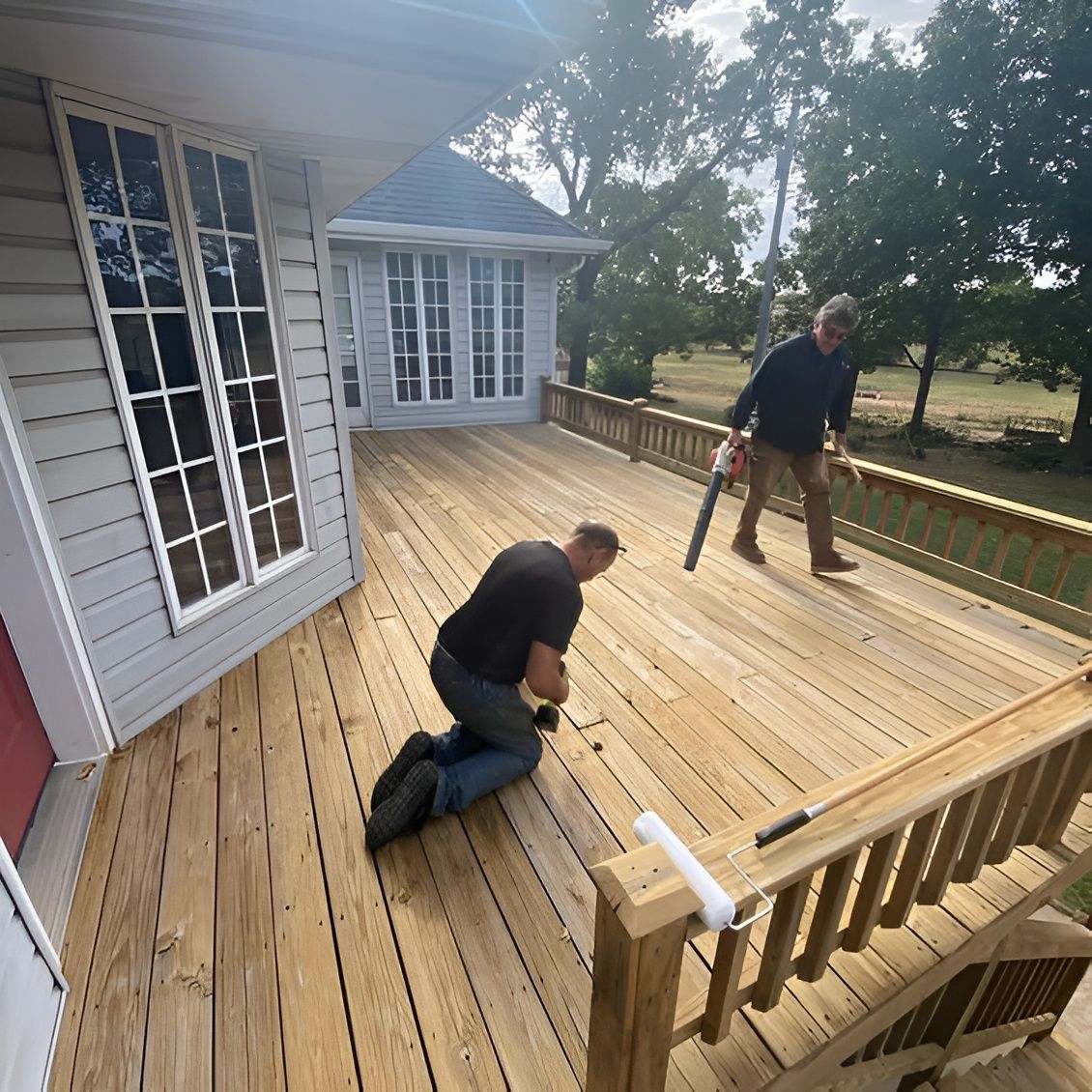
What Changes After the Deck Is Finished
You'll have a level, stable surface that allows furniture placement, foot traffic, and gathering space without concerns about uneven ground or mud. Multi-level designs create separation between cooking areas, seating zones, and access points, which is especially useful when the yard slopes or when you want to define how different areas function. Railings are built to meet height and spacing requirements, and stairs are positioned based on how you move between the deck and yard.
After Storm Pros MO completes the installation, you'll notice the deck remains stable through temperature swings, doesn't shift or sag under load, and sheds water without trapping moisture against the joists. Composite surfaces stay cool enough to walk on barefoot even in direct sun, and the color stays consistent without annual maintenance. If you choose wood, the structure still holds its shape, but you'll need to clean and seal it every few years depending on exposure.
The framing is set on footings that extend below frost line to prevent heaving, and ledger boards are flashed and fastened to prevent water intrusion where the deck attaches to the house. Electrical rough-in for lighting or outlets is completed before decking goes down. Custom layouts can include benches, pergola supports, or space for a hot tub, but those elements require load calculations and additional structural reinforcement that must be planned during the design phase.
What to Know Before You Build
Most deck projects involve questions about material longevity, layout constraints, and how the structure interacts with your home's exterior and drainage patterns.
What material works better for a deck that stays in full sun all afternoon?
Composite decking resists fading and heat retention better than wood and won't splinter or crack under UV exposure, making it more comfortable and lower maintenance over time.
How do you handle a yard that slopes more than four feet from the door to the ground?
Multi-level deck designs break up the elevation change into shorter stair runs and create defined zones, which also reduces the overall height and visual bulk of the structure.
When does a deck require a permit in Kansas City?
Any deck attached to the home or elevated more than thirty inches above grade requires a permit, which includes plan review, footing inspections, and final approval before the surface is installed.
Why does the ledger board attachment matter?
The ledger transfers the live load of the deck to the house framing, so it must be through-bolted to the rim joist and flashed to prevent water from running behind the siding and into the wall cavity.
What happens if the deck joists aren't spaced correctly for the decking type?
Composite decking requires closer joist spacing than wood to prevent sagging and flexing, so the framing layout has to match the surface material before installation begins.
If you're planning to add outdoor living space or replace an aging deck that no longer feels safe, contact Storm Pros MO to schedule a design consultation and review material options suited to how you'll use the space.